Same But Different: Learning How to Screenprint My Collages
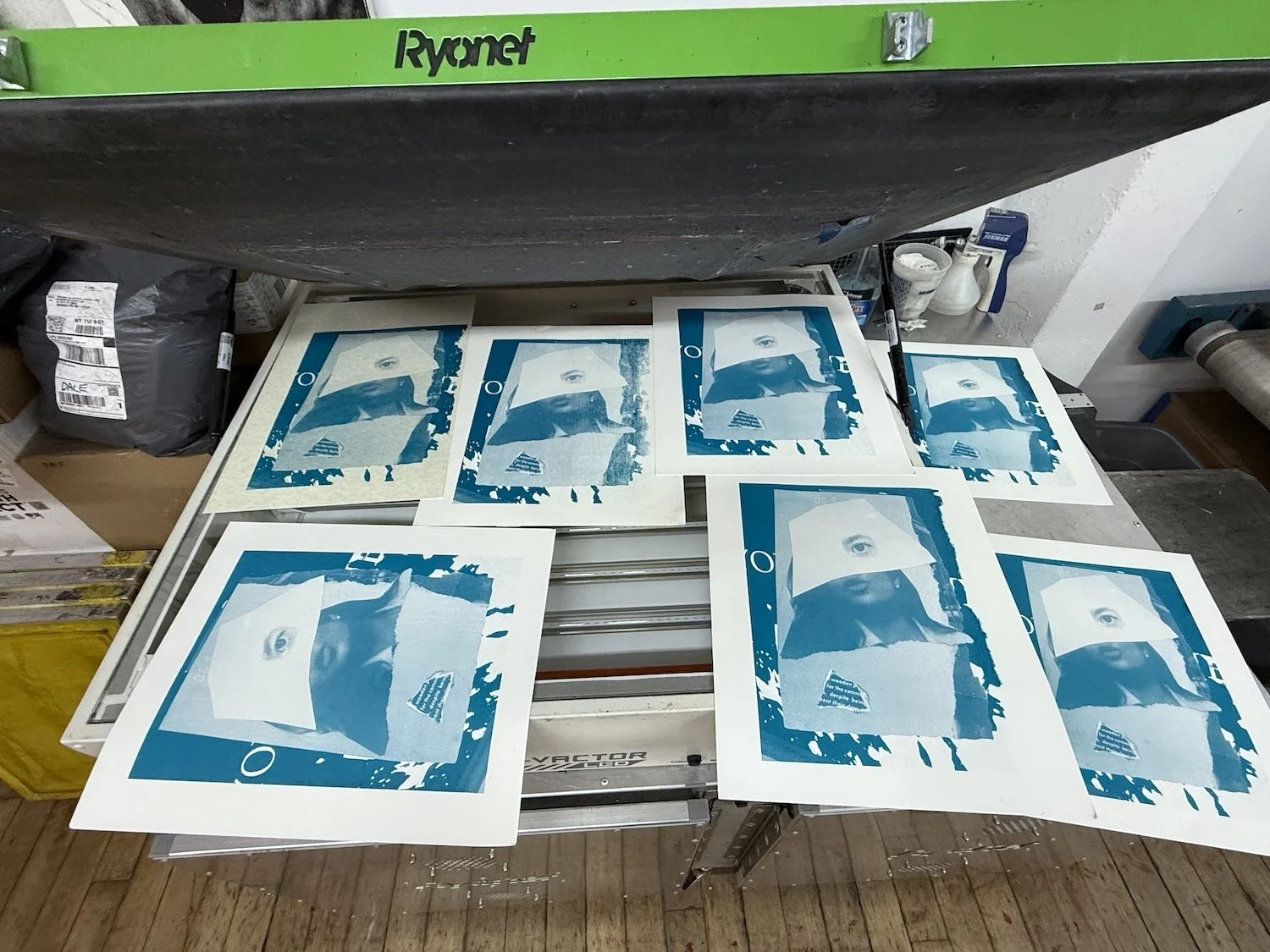
The first color of “Yellow Eye” screenprints drying at Gowanus Print Lab, Brooklyn.
I like collage because in its world, perfection does not exist. To make a collage, the artist must take apart existing images, scavenge scraps from daily life, perhaps apply pigments, add textures, affix three-dimensional objects. And all of these steps mean disruption. The collage itself might be visually and sensorially satisfying, but it is not perfect because it abides by no norm. It decides for itself that it is complete and whole, but this is not the same thing as being correct. At its most effective, a collage isn’t even knowable, though it might be viscerally familiar.
I say all of this because screenprinting can offer this same form of release from doing things “right.” There are clear steps to the process, and they should be performed as directed, but the result can’t really be predicted. At least not when the printing is done by hand. Each pull of the squeegee can yield a surprise. And once it’s done, it can’t be undone. You have to start over again if you prefer a different outcome.
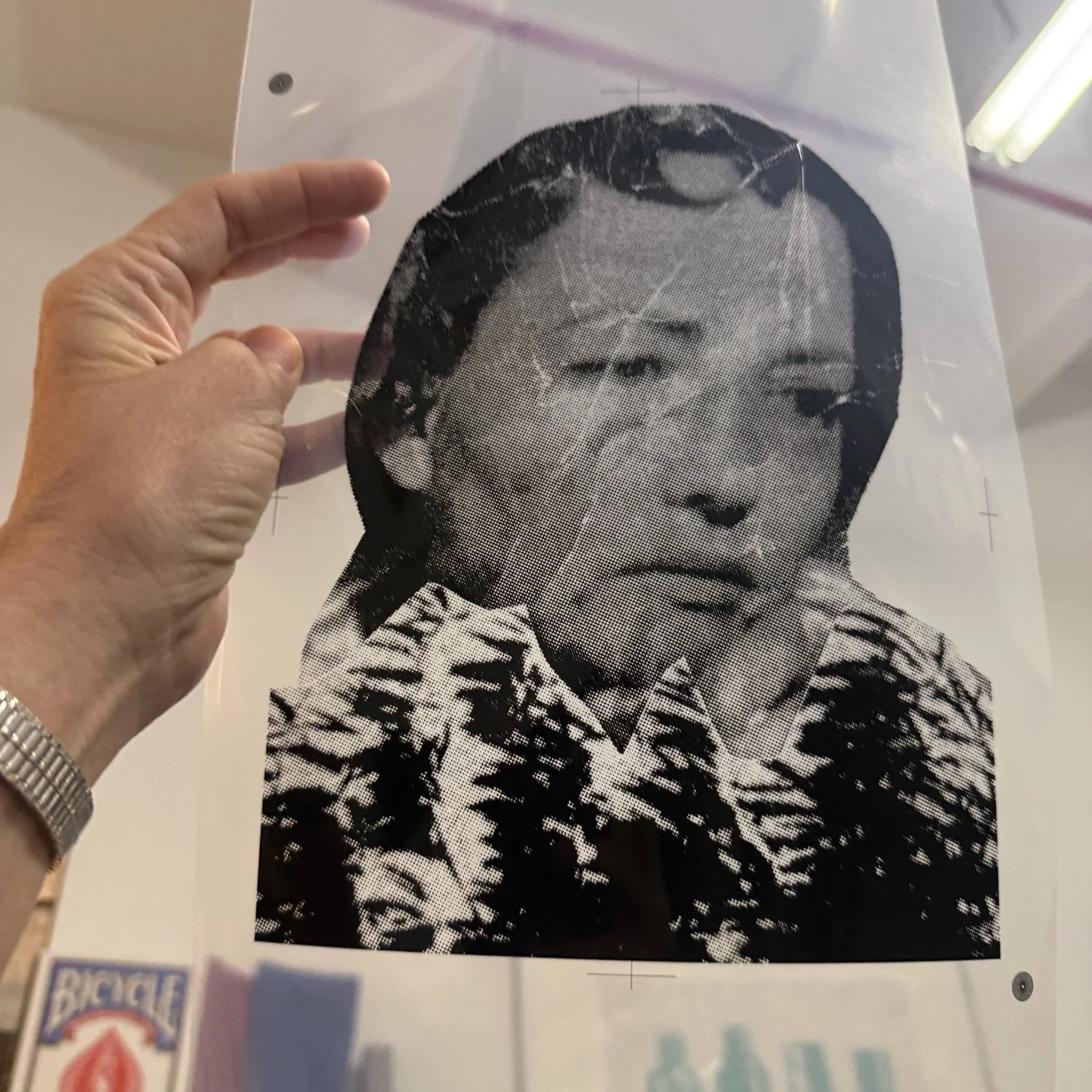
The acetate for “Untitled,” for my first try at screenprinting my own work.
This spring, I signed up for a four-session screenprinting class at Gowanus Print Lab in Industry City, Brooklyn. For years, I’d been wanting to explore this technique. Now was the time. The tactile delights were many. The ink-spattered workshop floor; fine mesh screens whose stainless steel frames bore traces of all the projects that came before; the factory-sized, octopus-armed T-shirt press; stacks of plastic takeout containers filled with pigment; and a spacious worktable under bright lights. Just being there felt like a thing.
I chose three collages of my own to print, curious how they’d translate in this medium. Accustomed to working directly with color and shapes, observing and reacting to the interactions as I juxtapose fragments, I really struggled to figure out which collages would be suited to screenprinting—which requires creating a bitmapped, layered Photoshop file in grayscale and full black, and then determining the order in which to layer your pigments in the studio. My brain just doesn’t work that way, making the process even more obscure. But also more exciting. I had no idea how the prints would turn out.
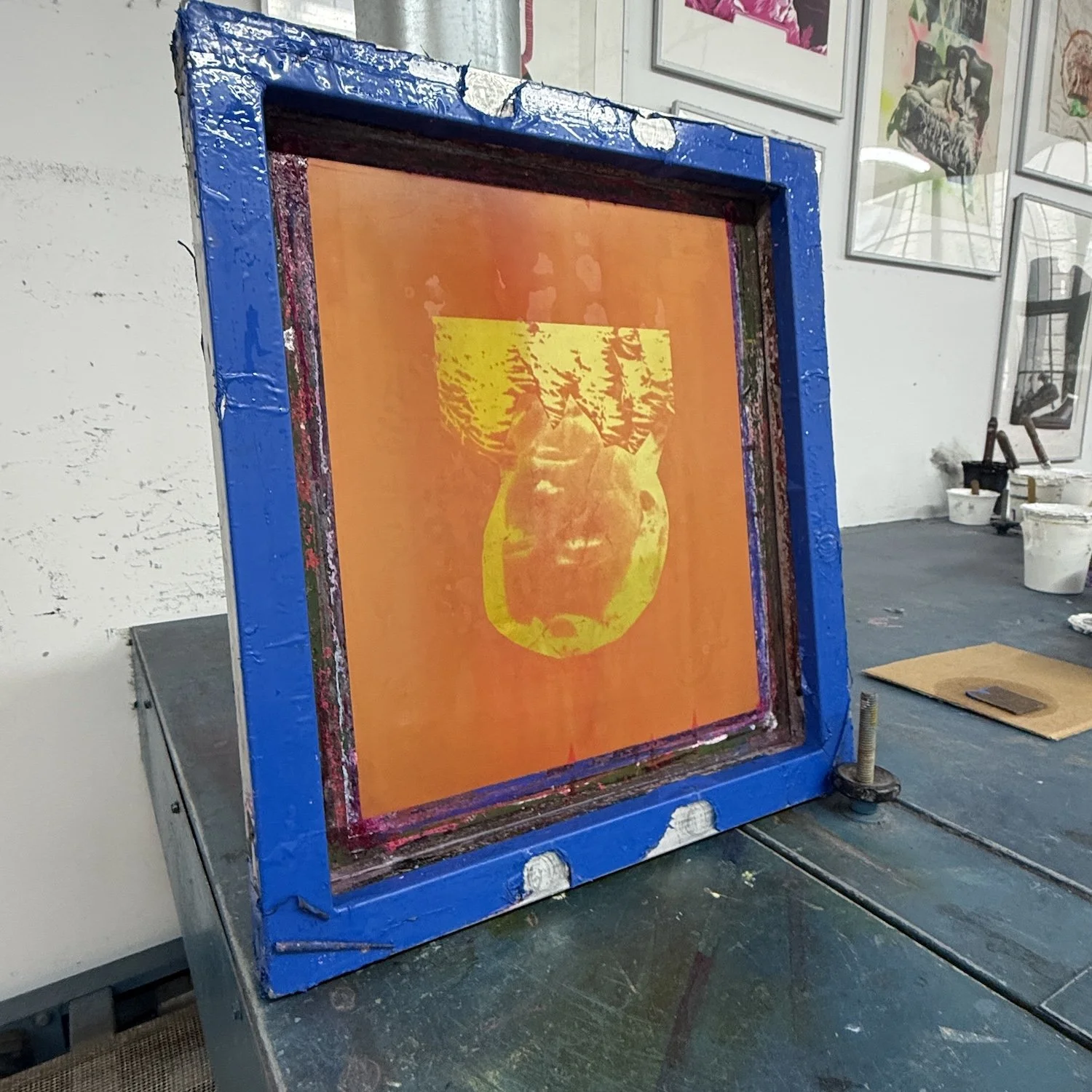
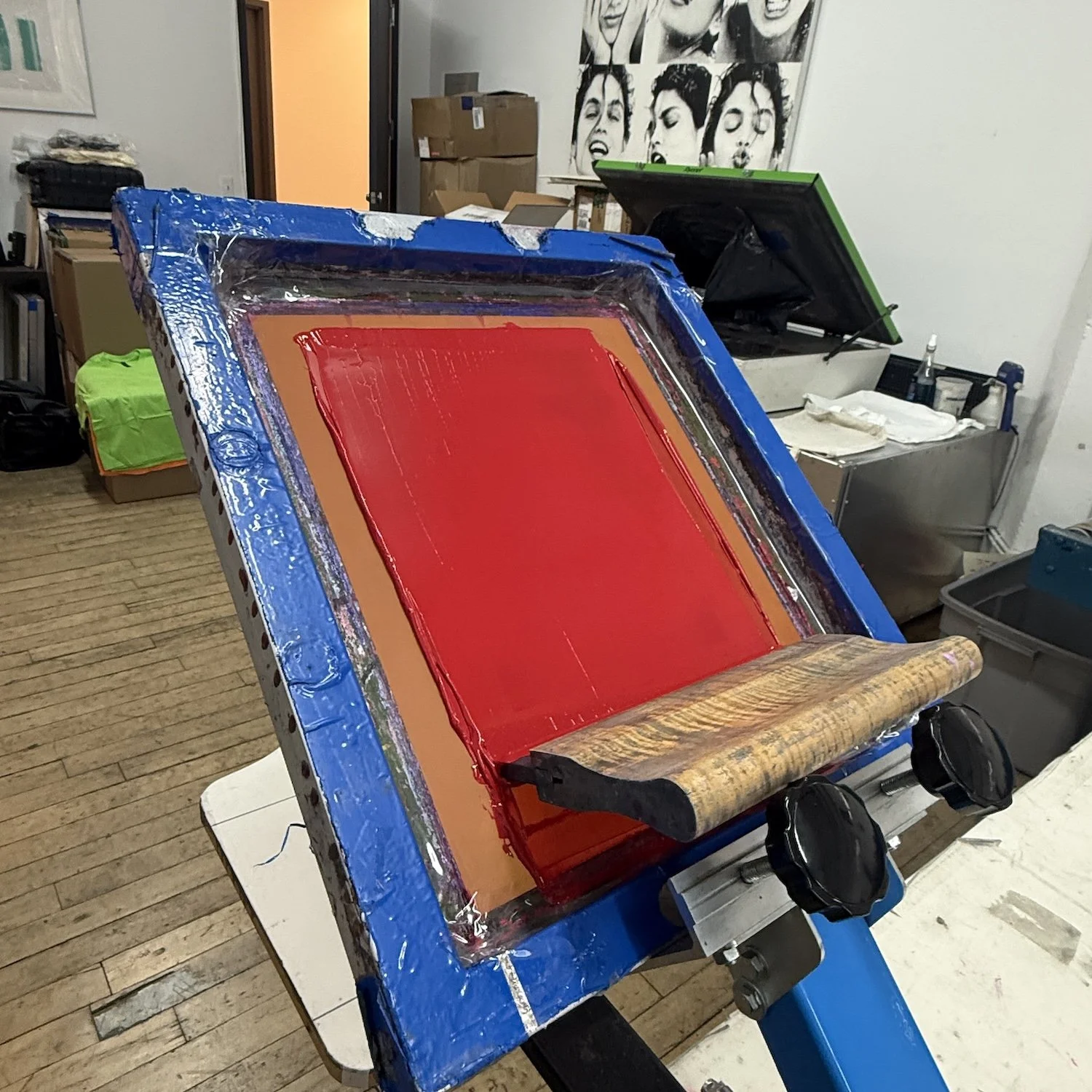
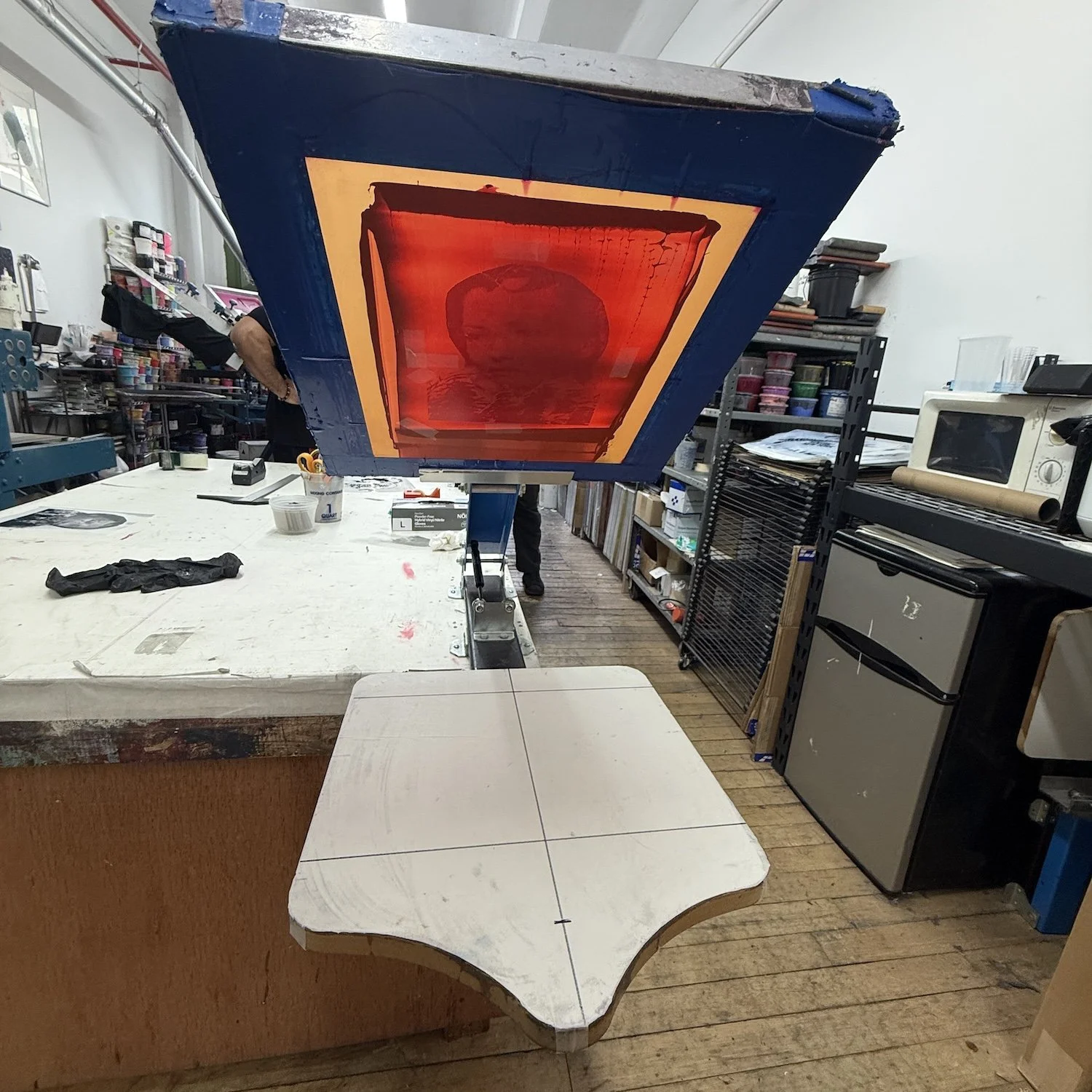
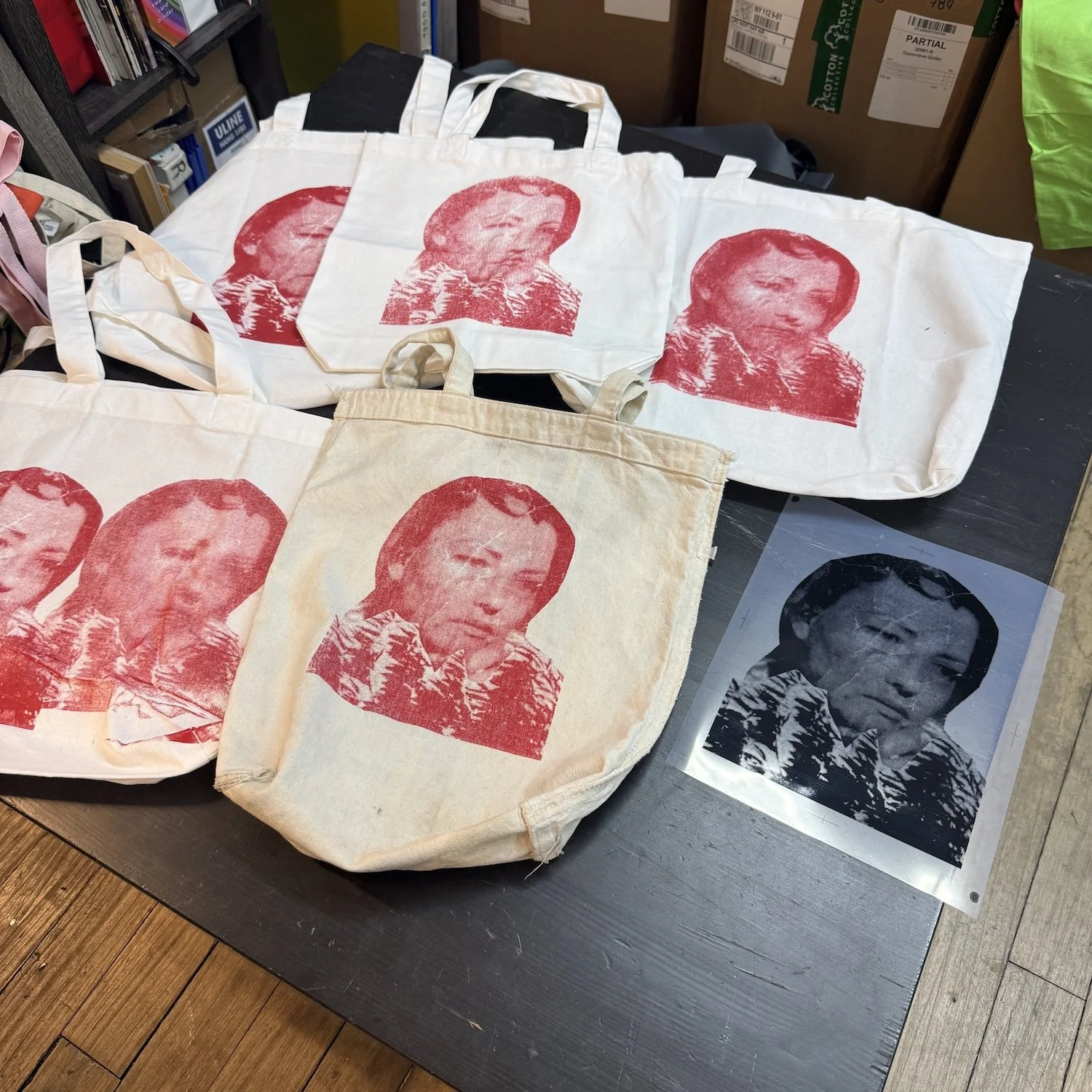
My first try was printing on tote bags and tees. One color. Once, I pulled the ink twice and the registration was slightly off. The shadow effect made the image that much more interesting. Next, a two-color screenprint using green and blue. The palette is a complete departure from the original collage but works in new ways. Last, an attempt at a three-color screenprint. The Photoshop layers had been mislabeled somehow, either by me or the instructor, and the colors did not come together. In fact, they clashed and the design was compromised rather than reinterpreted. But in two colors: There was promise there.
In reverse order:
“Empire State,” a cut-and-paste collage I made in the 90s using an admission ticket from the Empire State Building. A friend+ (we didn’t say “friends with benefits” in the 90s) and I went on our lunch break from our Midtown magazine jobs, even though visiting the ESB when your office is in Times Square obviously takes more than an hour.
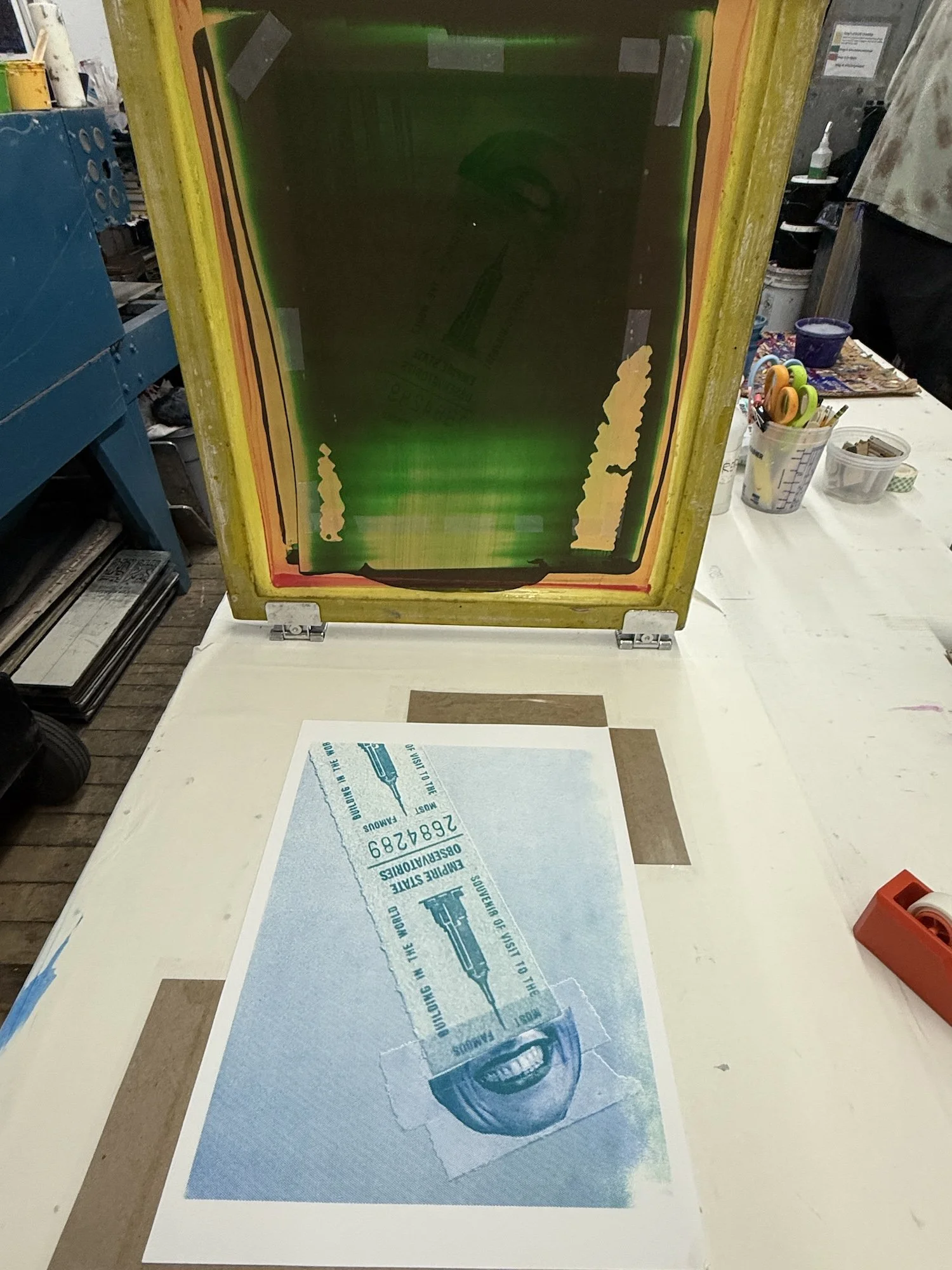
“Empire State.”
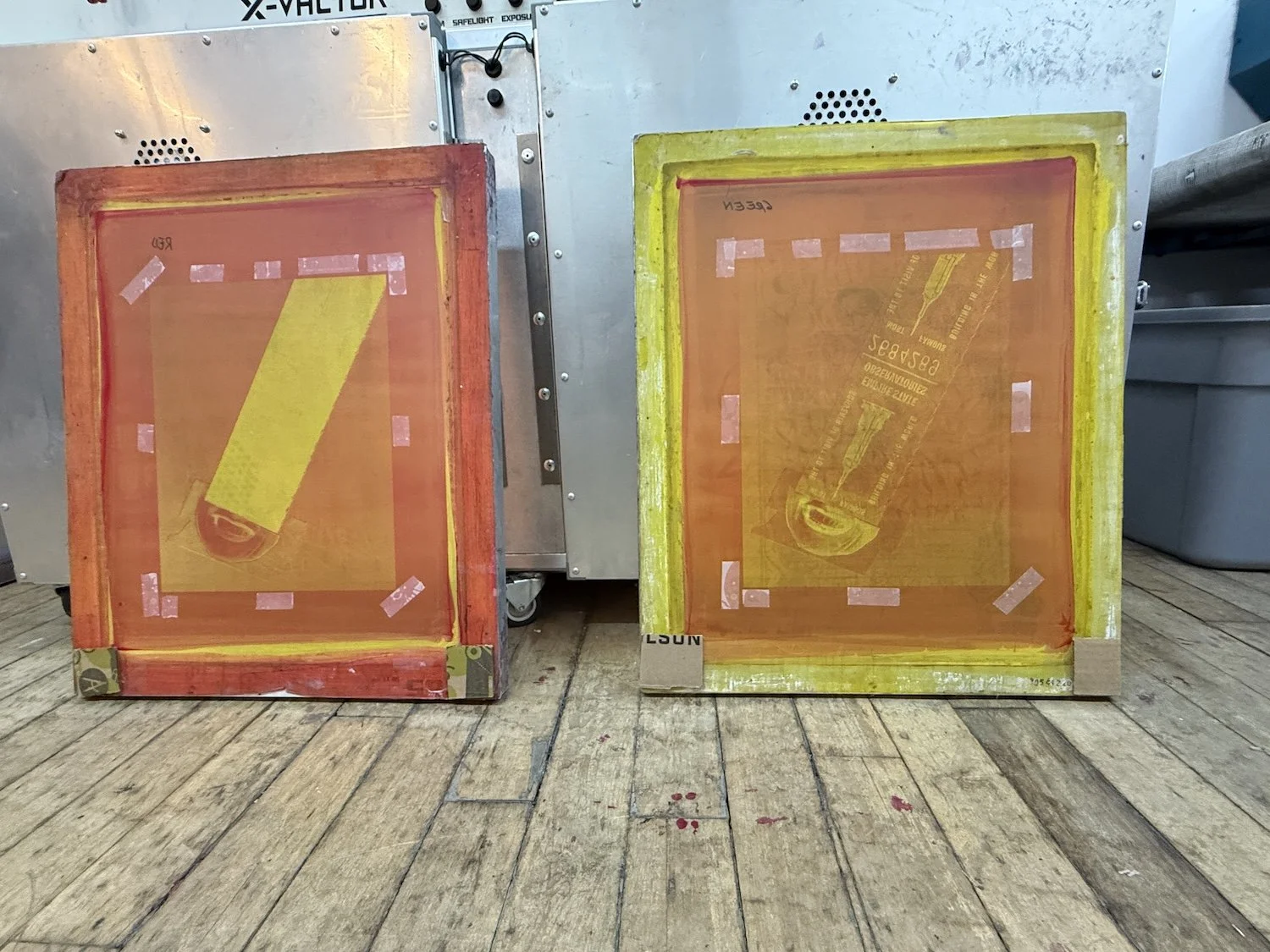
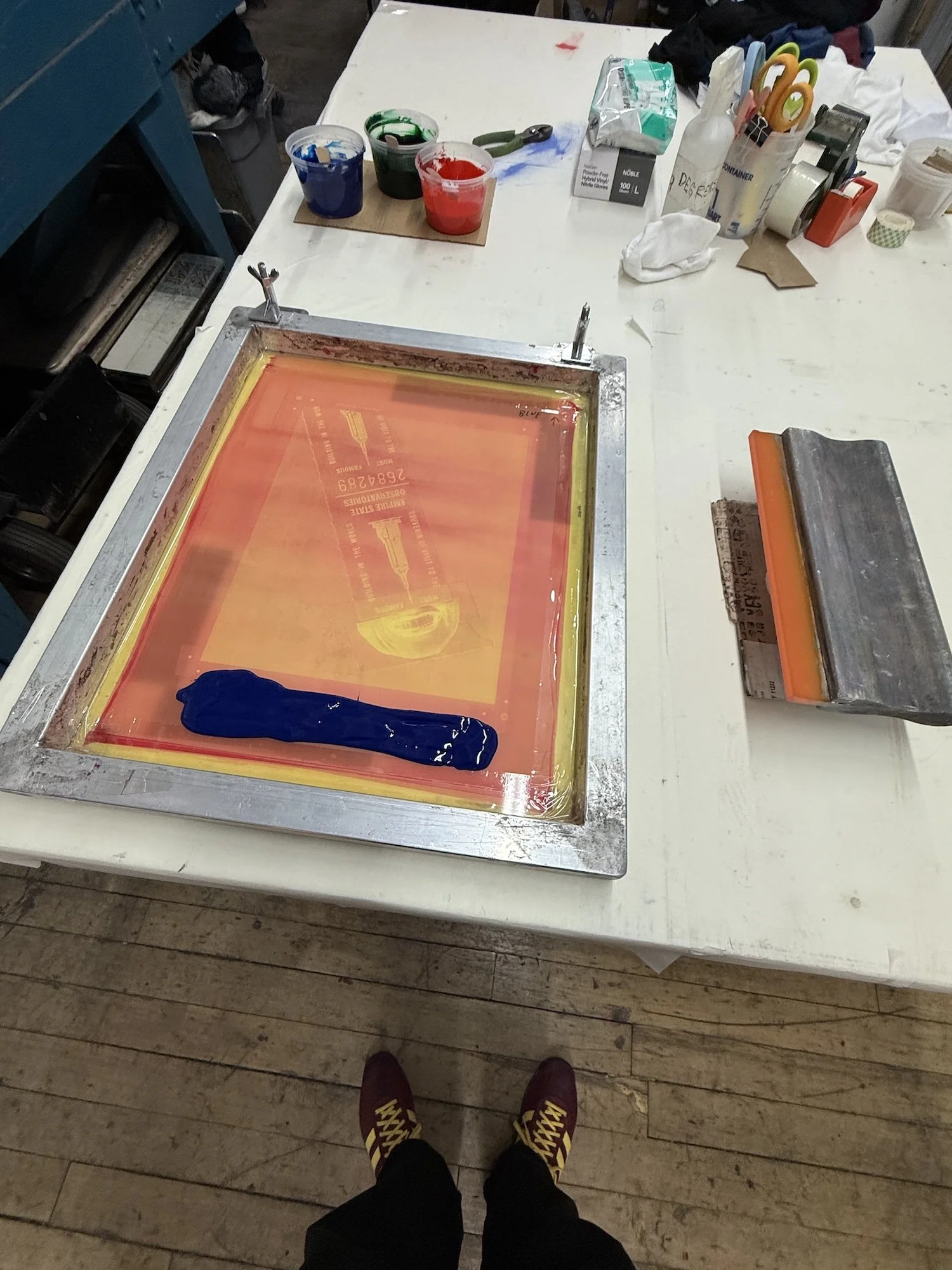
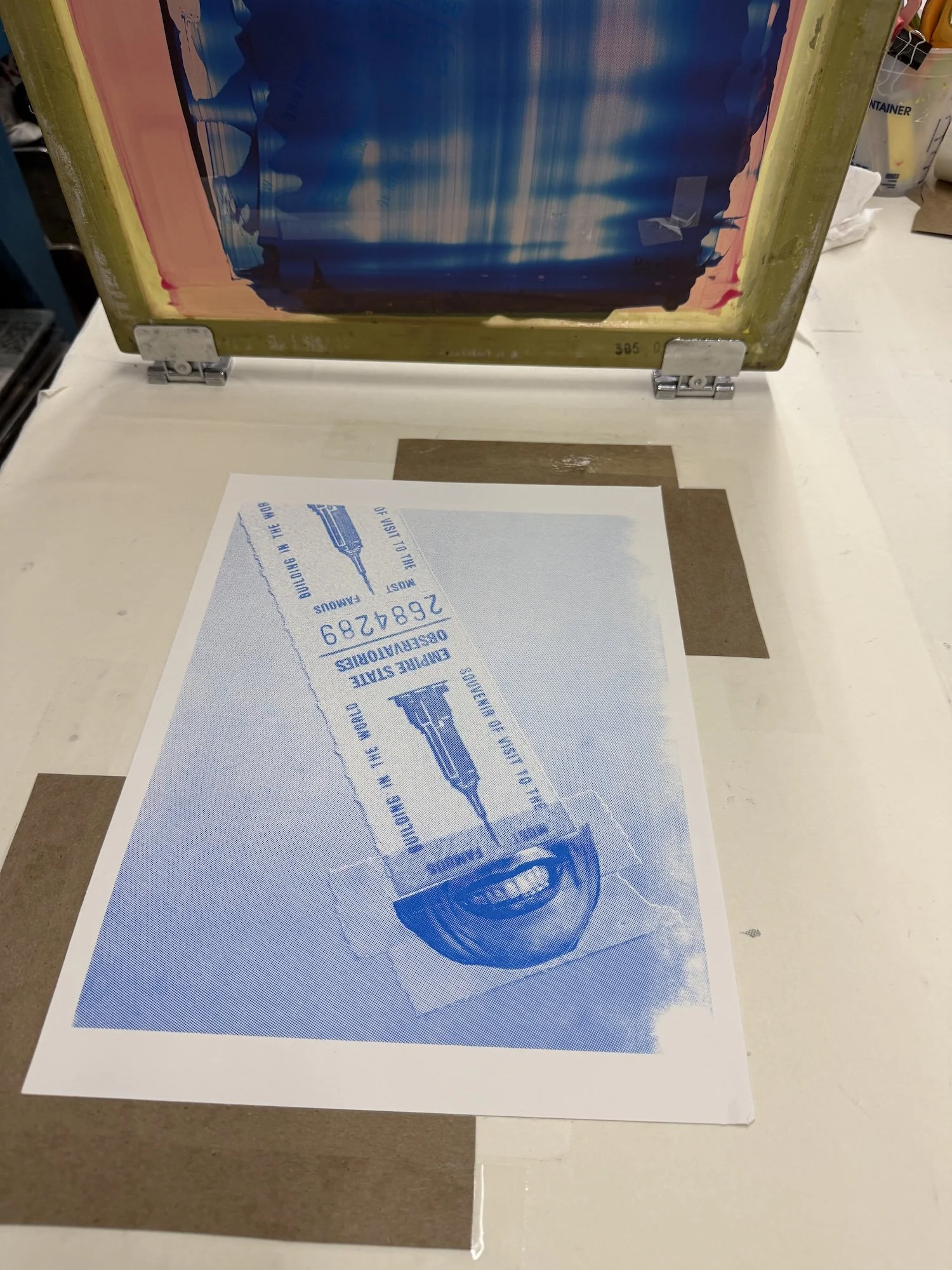
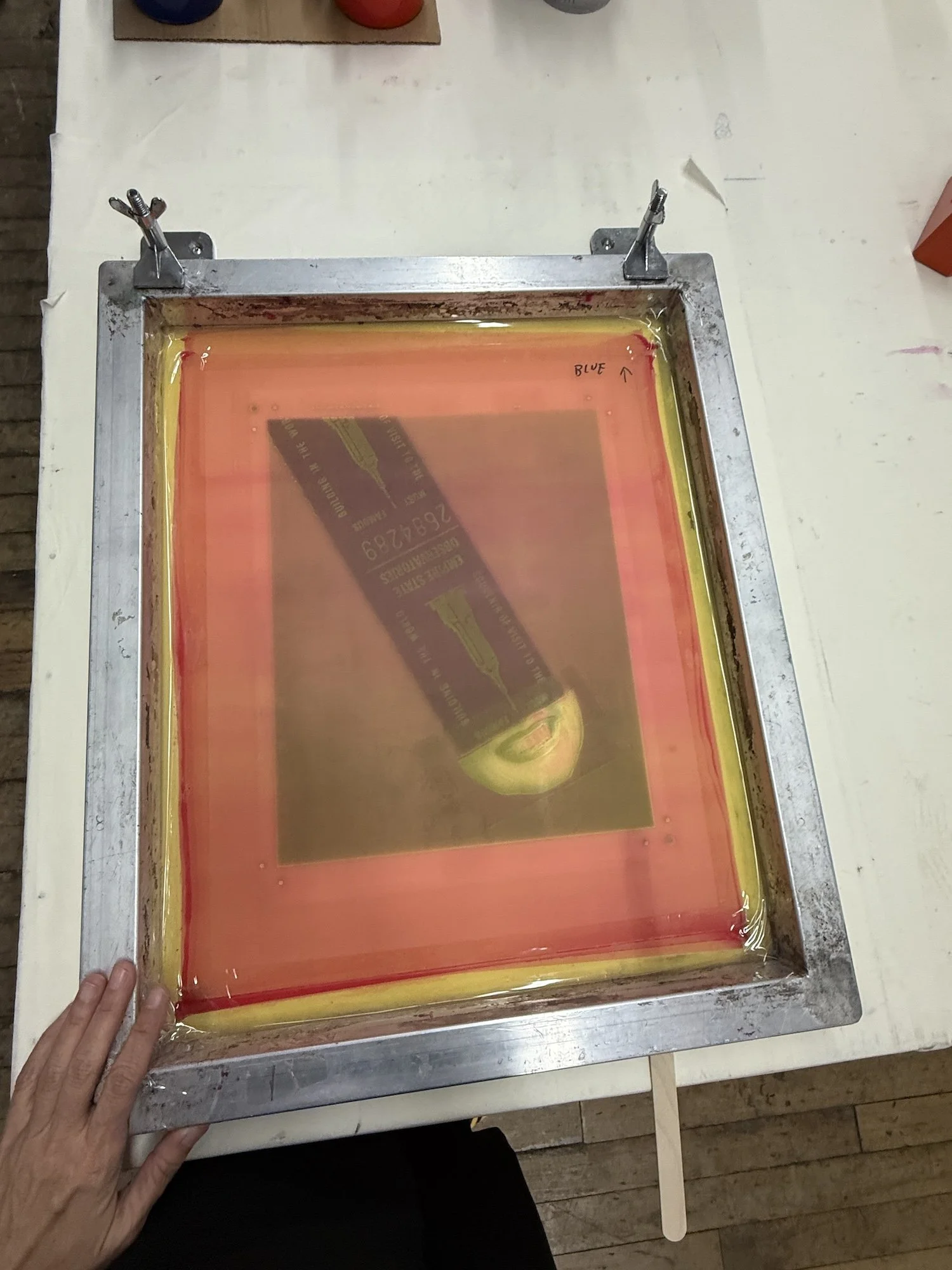

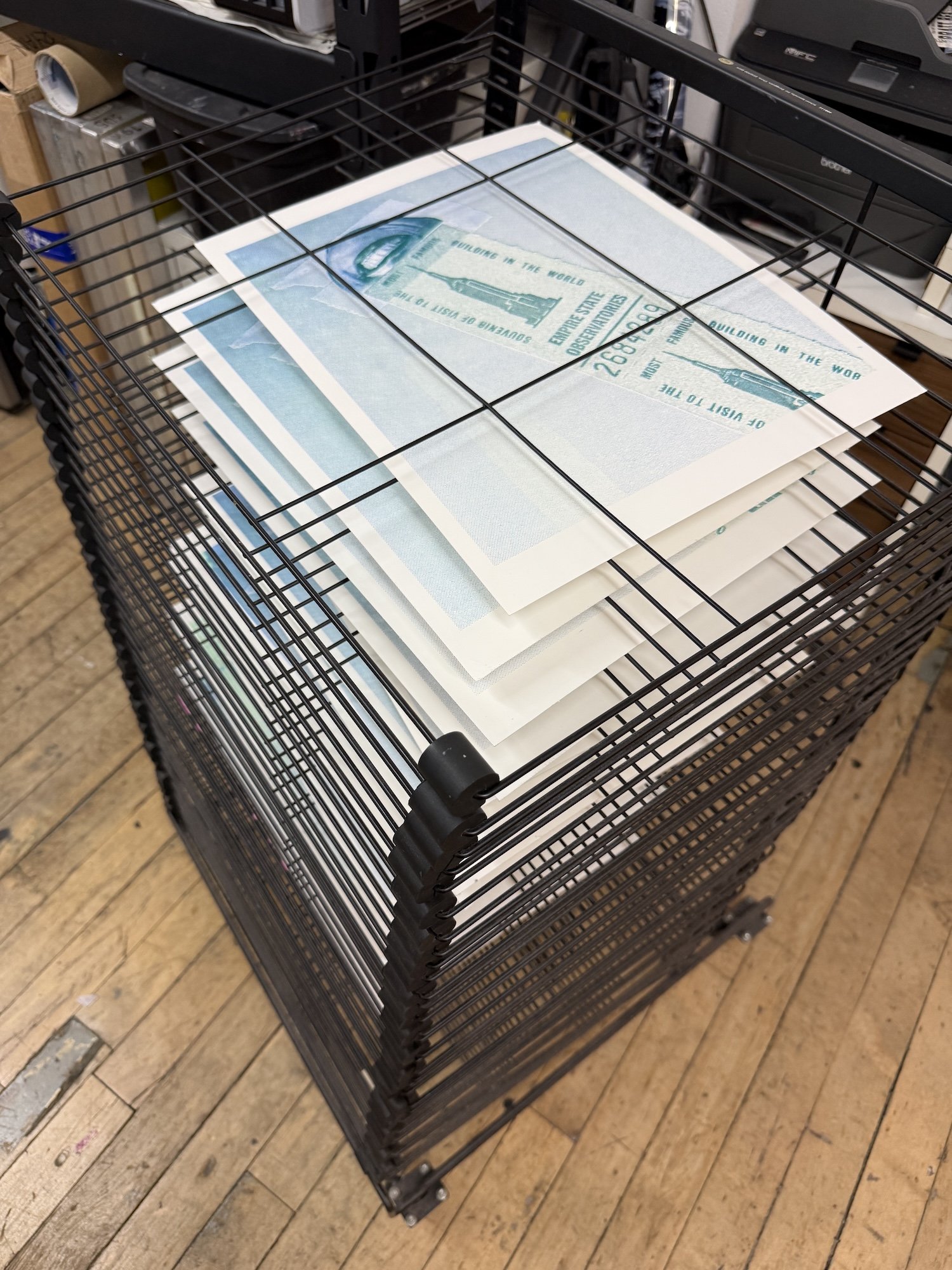
“Yellow Eye,” a cut-and-paste collage photographed from my collage notebook and superimposed on a photo I shot on my first day in Kingston, New York, in October 2023. A get-acquainted walk I took on a bright, crisp morning.

“Yellow Eye”
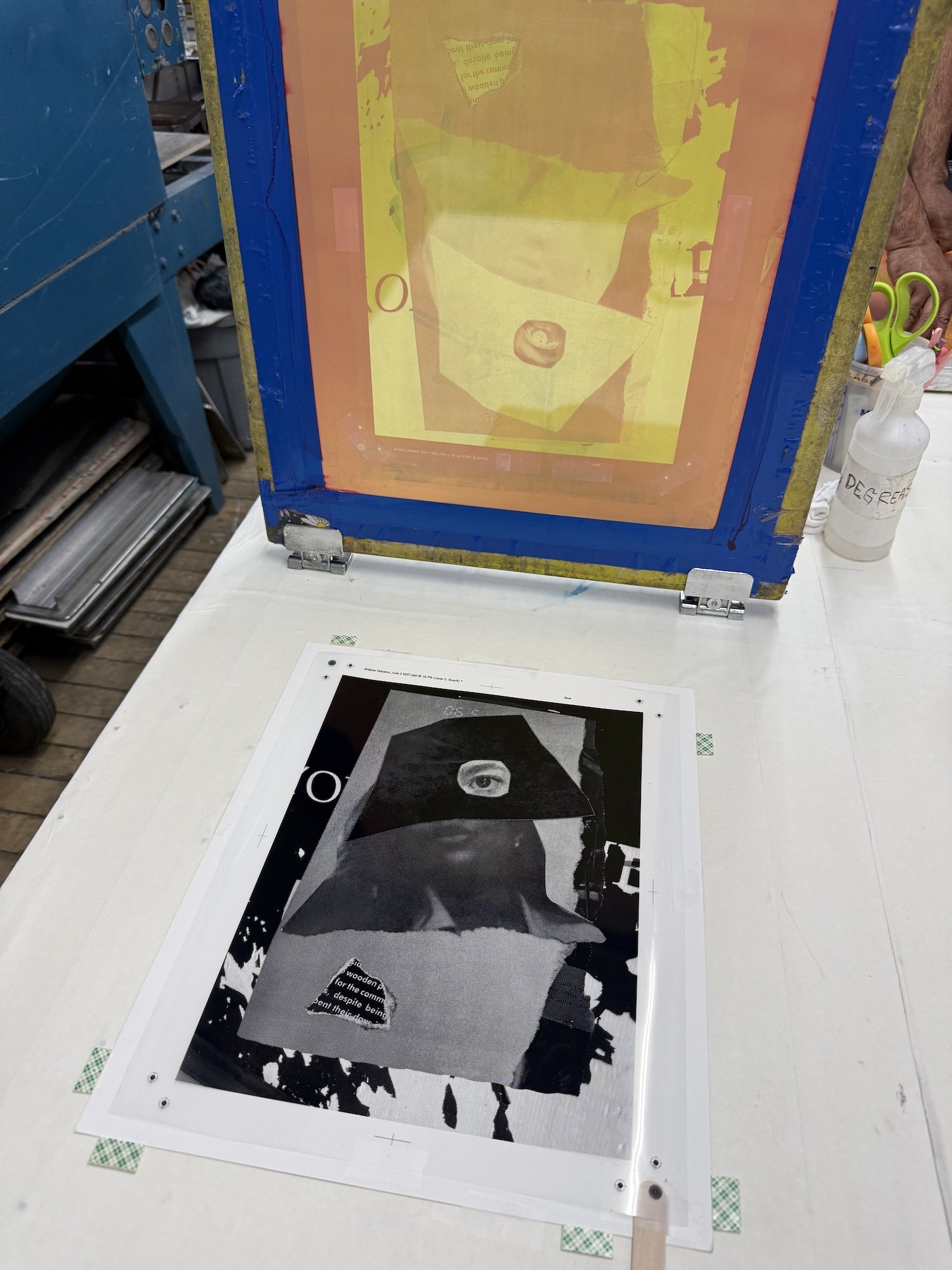
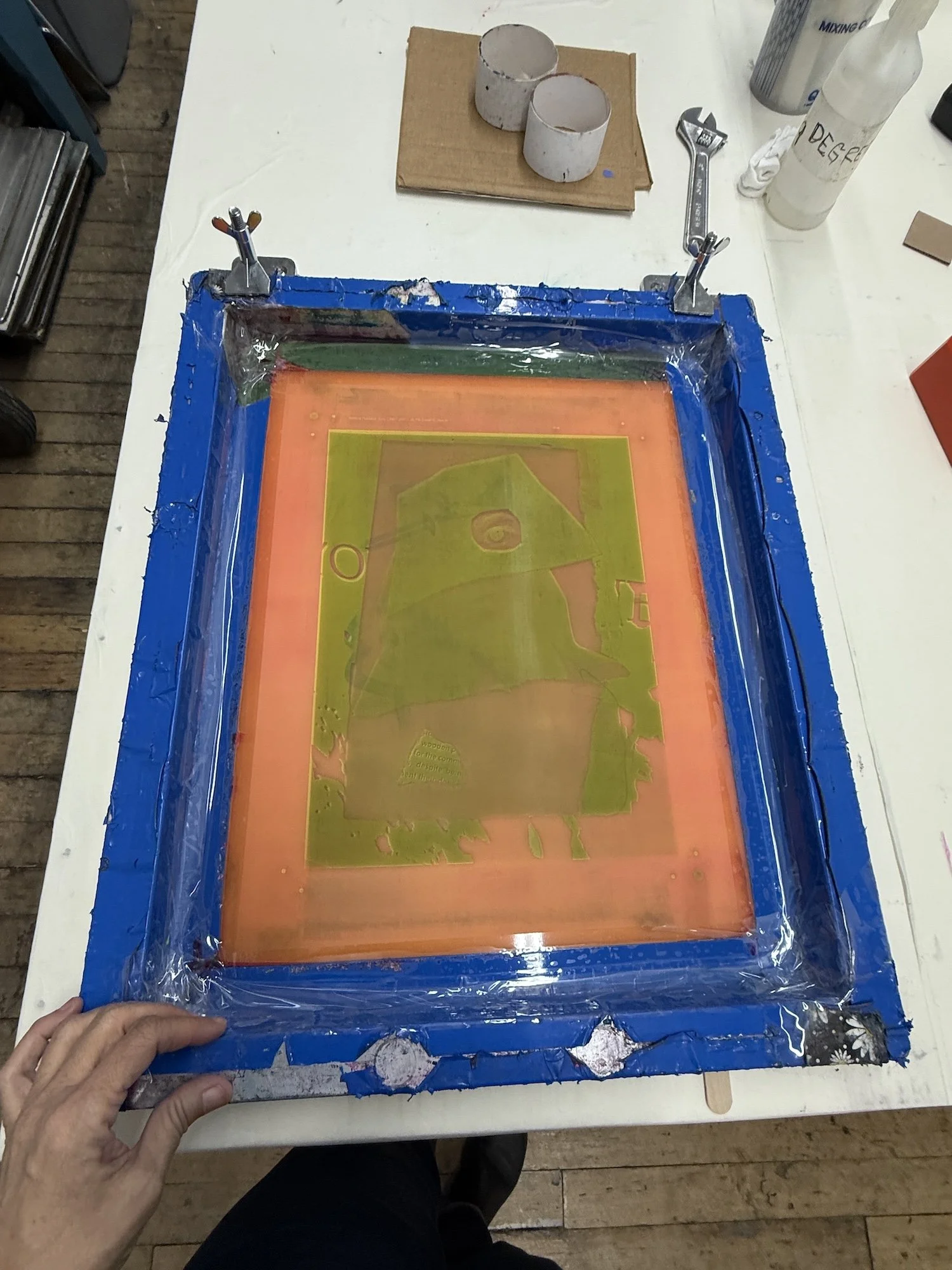


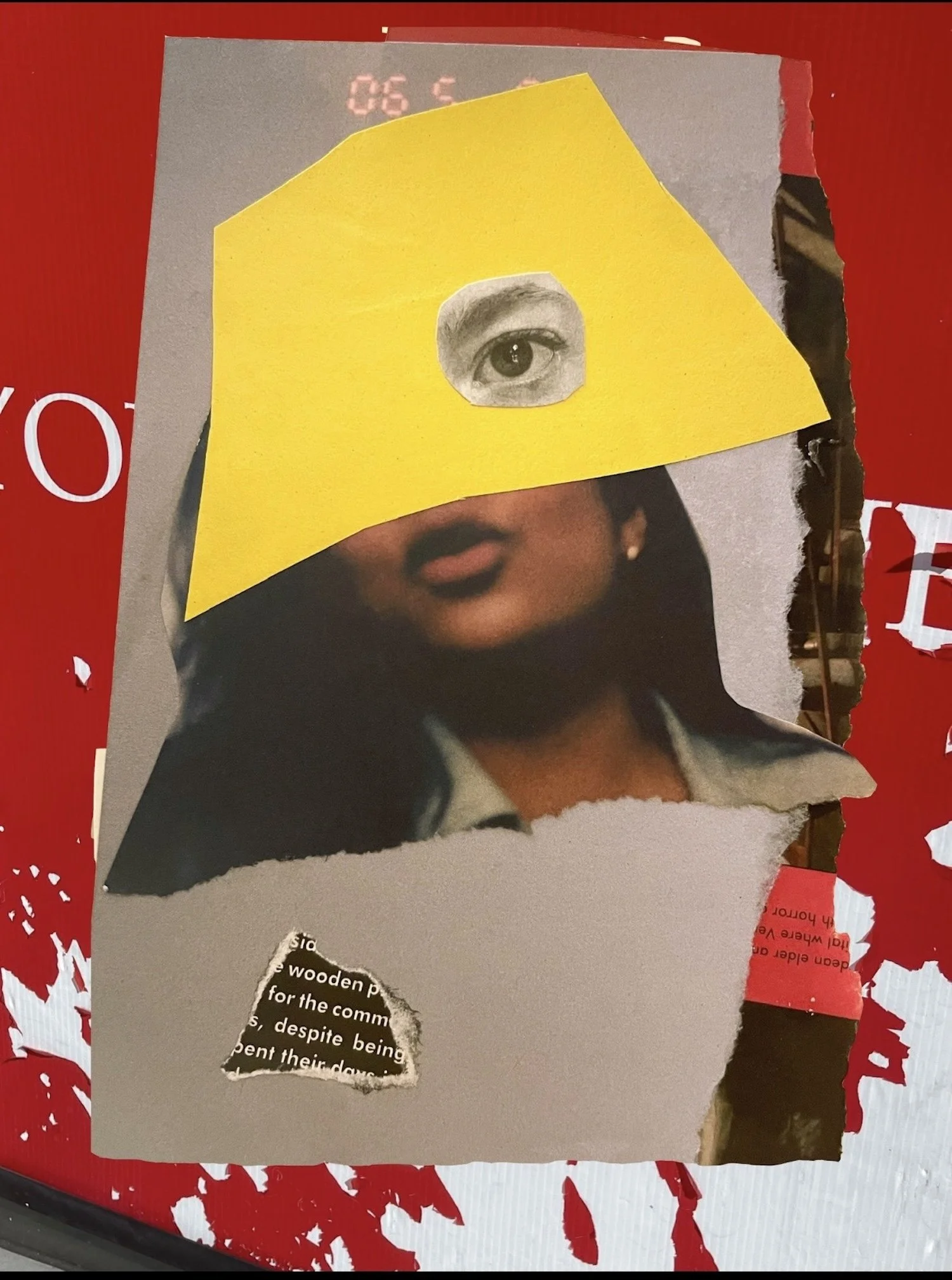
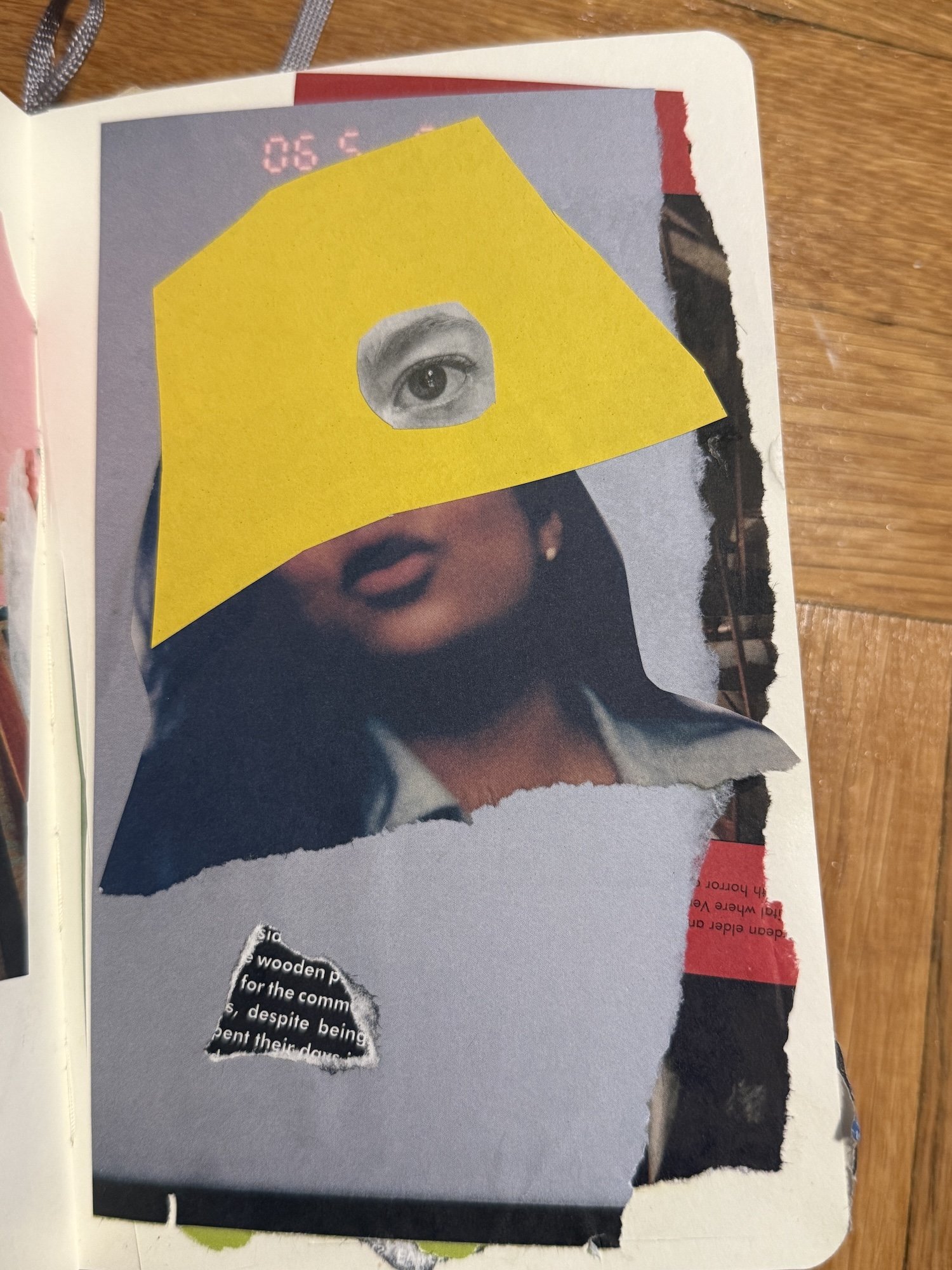
“Untitled,” a cut-and-paste collage of a photograph of my TV screen while watching a Barbara Stanwyck movie (the woman is a bit player in the film) and a magazine clipping.
Many of the photos here, and the video, were shot by my classmate, Michael. A retired cop. A musician. A dad to five boys, now grown. A husband. Born and raised in Queens. Lives on Long Island. A quietly perceptive individual. He became a cop because when he was young, someone told him he’d amount to nothing. He decided to find a career that would give him strong benefits and a path to early retirement. To prove that person wrong. He’d work his shift, 1-9 PM, then go make music. And be unbothered by the rest. In his retirement, he records and produces, and he’s making a screenprinting setup in his garage. His wife runs a healthcare business they started together. Michael has that calm, assertive energy. He seems unshakable. He’s a solid, kind man built like a bulldog and all heart. With all his different facets, he was as much of a revelation as the class itself.